
‘One million young people are neither earning nor learning’
Sir Keir Starmer, being interviewed on Political Thinking

The Labour Party's struggle over welfare payments is portrayed as the direct result of the Government attempting to tackle the challenge in Sir Keir Starmer’s quote. It resulted from an attempt to use the ‘stick’ of lower welfare payments to drive people into the workplace, as opposed to an intelligent analysis of how to empower young people to take the initiative themselves.
It's hard to see a coherent strategy for increasing employment in the Government's current approach. The substantial increase in Employers’ National Insurance last autumn was a major disincentive for businesses to increase their labour force; meanwhile, the Government’s benign approach being taken towards Artificial Intelligence flies in the face of the major fall in the number of entry level jobs for young people, as job research site Adzuna reported on 30th June.
Government is not only challenged by inconsistency in policy, but also by the sheer weight of the public sector which follows from the socialist mindset that ‘government has all the answers’, and that there's no need for individual empowerment. The Adam Smith Institute reported recently that ‘Tax Freedom Day’ was on 12th June this year, the highest level since 1985, while ‘Cost of Government Day’ which factors in public sector borrowing as well, is now on 22nd July.
The previous Labour government of Tony Blair and Gordon Brown understood individual participation and empowerment much better than Keir Starmer's team. They appreciated that the route to a more egalitarian form of capitalism lies in individual freedom and ownership for all. Gordon Brown introduced two landmark initiatives to move this forward: a major employee share ownership initiative called the ‘Share Incentive Plan’, and the Child Trust Fund.
The Share Incentive Plan spread participation in ownership throughout a company's workforce: previously such schemes were principally designed for senior managers and directors. Meanwhile, the Child Trust Fund brought individual ownership into every home with a child born in the United Kingdom from 1st September 2002. There are now 3.7 million young adults who were issued with these accounts, although just over half a million of them are unclaimed HMRC-allocated accounts for which HM Treasury should be introducing an ‘Automatic Release at 21’ scheme.
Individual ownership matters for two key reasons: it can relieve a substantial burden of anxiety, particularly when unencumbered by debt, and the participation which it provides encourages a sense of responsibility. In this week's episode of The Hypnotist, Adam Cox explains this at a personal level.
In contrast to Gordon Brown's initiative, the current Labour Government clearly rates state control as more important than the individual freedom that ownership bestows. It's possible that this may be at least partly due to the very challenging state of public sector finances; but, if that is the case, Rachel Reeves and Wes Streeting should be significantly reducing the huge cost of the National Health Service in their new ten-year plan by accepting our proposal for the introduction of mandatory private health insurance for wealthy old people, accessible by the NHS as its services are used.
However, the Chancellor’s dismissive comments about health insurance in her Spending Review speech were not encouraging: instead, she seems to prefer the prospect of tax turmoil in the forthcoming Autumn Budget (although it was interesting to note that her opposition to health insurance was ‘politically redacted’ from the online text of her Spending Review speech).
In addition to this initiative for a substantial reduction in cost for the health service, we have set out clear proposals for the UK Government to enable individual ownership and freedom for all, and with a particular focus on young people.
Our plans for introducing a philanthropically-funded ‘Mark 2’ of the Child Trust Fund would enable nearly a quarter of a million young people each year to start adult life with financial resources, which they could also boost significantly through a programme of incentivised learning in financial awareness. This would be a far more constructive way to prepare them for adult life than using the ‘stick’ of reducing welfare benefits, but it does require a partnership with Government who need to provide the necessary regulation and logistics.
The Share Foundation has already proved the effectiveness of this approach with its Stepladder Plus programme for young people in care, and Sussex University is now helping to provide a firm basis of independent research from this experience, which has seen nearly two thousand participants thus far.
Meanwhile, Share Alliance continues with its research into both inter-generational rebalancing and its ‘Stock for Data’ proposition, which could provide a significant alternative to Universal Basic Income as Artificial Intelligence continues to bear down on employment opportunities. The next stage for this research programme will be the construction of a simulation engine which can demonstrate the opportunities provided by mass participation in tech giant stock ownership.
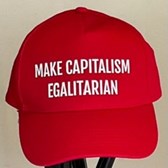 On 10th June last year, before the UK General Election, this commentary invited Sir Keir Starmer to ‘Say Farewell to Socialism’. That remains our firm advice to this Labour Government: to change tack completely from relying on an overweight State to run everything, and instead to introduce a new approach for a more egalitarian form of capitalism. There is no political party at present with this as its driving force, but both our population in the United Kingdom and those elsewhere would relish the prospect of individual freedom and ownership for all.
Who knows? It may also introduce a new spirit of generosity as a result of which we just might learn to live more at peace with one another.
Gavin Oldham OBE
Share Radio